Realm of the SCENSCI

A Confluence of Science, Politics, and Literature

    • About
    • Blog
    • Heil Genocide of “Human Cockroaches”
    • Home
  • The Ship of Theseus sails in Water (and not H2O)

    The Ship of Theseus sails in Water (and not H2O)

    The difference between natural language and the language of science The problem of reference in philosophy deals with relations of words to the world. Do words correspond to some mind-independent objects in the external world? In the following text, I propose the thesis that “reference” is one area where science and everyday affairs take sharp,…

    rrameez

    September 15, 2013
    Modeling, Philosophy, Philosophy of Science, Science
    Aristotle, Chomsky, H2O vs Water, Hilary Putnam, Hume, Language, Locke, Obama, Plato, Princess and the Frog, Ship of Theseus, Wittgenstein
  • Post Adolescent Idealism? Why psychologizing behavior is APSD: Acute Pseudo-Science Disorder
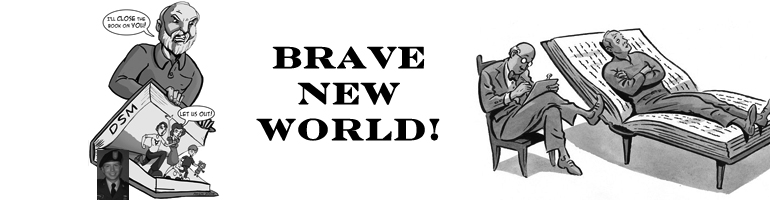
    Post Adolescent Idealism? Why psychologizing behavior is APSD: Acute Pseudo-Science Disorder

    The travesty that was Bradley Manning’s trial is a topic for another forum. Reading about the court proceedings, what immediately struck me was the psychotherapist’s verdict on Manning’s behavior. He was suffering from “Post Adolescent Idealism”, said the therapist. His bashers took this and other psychological judgements that were passed on Manning (narcissism, obsessive compulsive…

    rrameez

    August 18, 2013
    Abuse of Science, Science Debates, Social Science
    American Psychiatric Association, Bradley Manning, Diagnostic and Statistical Manual of Mental Disorders, Dostoevsky, Einstein, Elizabeth Spelke, Galileo, George Miller, Herbert Simon, Human Behavior, Marlon Brando, Passive Aggressive Personality, Post Adolescent Idealism, Psychiatry, Psychology, Susan Carey, Tolstoy
  • World Bank and Mother India!

    So I was queued up at the university train-ticket shop. A middle-aged man was sitting on a sofa while his wife was buying tickets to some destination. Bound by my old habit of starting conversations with total strangers, true to form and tradition, I started a conversation with him. After the initial hi-hello, he asked…

    rrameez

    July 30, 2013
    Abuse of Science, Economics, Social Science
    Farmers Suicide, free markets, IMF, Indian Farmers, Kaushik Basu, Mother India, Nargis, Neoliberalism, World Bank
  • Eric Schmidt’s Nightmare

    The night of the happy day when Eric Schmidt, former CEO of Google had declared to the world that privacy was not that important and that if you have something that you don’t want anyone to know, maybe you shouldn’t be doing it in the first place, he had a dream that he had died and had ascended…

    rrameez

    July 26, 2013
    Abuse of Science, Distributed Systems, Engineering, Science Debates, Social Science
    Ads, Big Octopus, Edward Snowden, Eric Schmidt, Google, Google Glass, NSA, Prism, Privacy
  • Hippocratic oath or Hypocritic oath

    I remember around 10 years back, a friend who is a doctor, went to an impoverished locality in Karachi with a team to vaccinate children against some disease(s). Their team was harassed by some ignorant and mostly illiterate people who felt that such vaccination campaigns are part of a “western conspiracy” to harm them. “Why…

    rrameez

    July 14, 2013
    Abuse of Science, Social Science
    Abbottabad, CIA, Hippocratic oath, Hypocritic oath, Osama bin Laden, Pakistan, polio, St. Augustine
  • Abdus Salam and Galileo: The separation of science from religion (and philosophy)

    Dr Abdus Salam, the late Pakistani particle physicist is the only Muslim physicist till date to have been awarded the Nobel Prize. Dr Salam was rare among modern day scientists in that he was a devout Muslim. While most modern scientists are not concerned with religious matters, Dr Salam found his inspiration for science in religion.

    rrameez

    July 6, 2013
    Abuse of Science, History of Science, Philosophy, Science Debates
    Abdus Salam, Copernicus, Galileo, Inquisition, Lawrence Krauss, Philosophy, Ptolemy, Separation of science and religion, St. Augustine, The Assayer
  • The Ghost of Bob Dylan: On the two models of poetry

    I remember I first listened to Bob Dylan’s songs back in 2004 when I was studying in the small town of Colchester (the oldest town, and the first capital of Britain). I found myself relating to his songs in a way that I had never related to music before. The combination of his powerful lyrics…

    rrameez

    May 26, 2013
    Arts and Modeling
    antiwar, Art for art’s sake, Bob Dylan, civil rights, Faiz, Iqbal, Joan Baez, Obama, Pablo Neruda, Poetry, Protest poetry, revolution, Sahir, sixties, The Ghost of Bob Dylan
  • Re-Modeling Iqbal: Why Iqbal is too important to be given up!
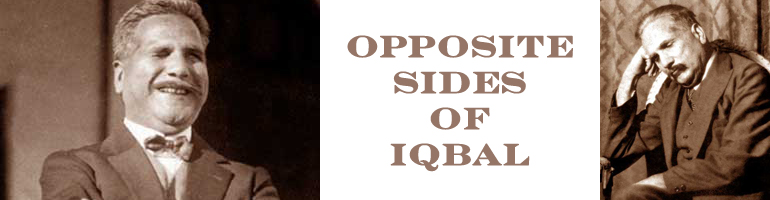
    Re-Modeling Iqbal: Why Iqbal is too important to be given up!

    Dr Muhammad Iqbal wrote one of the major national songs of India, has been declared the national poet of Pakistan, and served as one of the intellectual influences for Iran’s  revolutionaries. However, over the last few years, there has been an ever-growing allergy towards Iqbal among the liberal sections of Pakistan Iqbal is presently claimed…

    rrameez

    May 11, 2013
    Arts and Modeling
    9/11, British Empire, Faiz, Imperialism, Indian, Iqbal, Iran, Muhammad Iqbal, Mullah, Pakistan, Poetry, Religious Fanaticism, Sir Syed, Stalin
  • Wittgenstein contra Wahhab

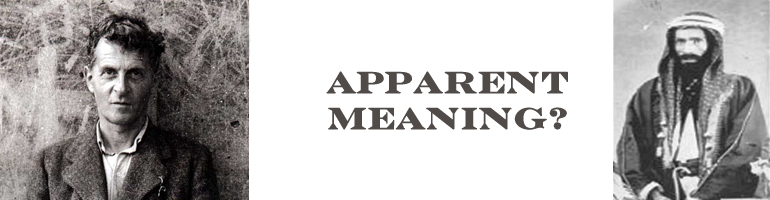
    Wittgenstein contra Wahhab

    The basic tenet of Salafi/Wahhabi Muslims is that the word of God, i.e., the Quran, is not open to interpretation; the meaning is apparent from what is stated and woe unto those who indulge in the needless and dangerous talk of interpretation. On the other hand, those who hold views similar to those held in…

    rrameez

    April 27, 2013
    Modeling, Philosophy
    Bertrand Russell, Frege, Islamism, Language Game, Mutazilite, Philosophical Investigations, Picture Theory of Language, Quran, Salafi, Shia, Sunni, Tractatus, US Imperialism, Wahhab, Wahhabism, Wittgenstein
  • William James and Free Will Peril

    William James and Free Will Peril

    The problem of free will, as classically defined, is that since each event is caused by a chain of antecedent events, nothing we do is of our own free will; if we do have free will, its hard to see how it could come about. Humankind has been at this problem for millennia. Instead of

    rrameez

    April 3, 2013
    Philosophy of Science
    David Hales, Doodle Talk, Free Will, Tamas Vinko, William James
Previous Page
1 2 3 4 5 6
Next Page

Blog at WordPress.com.

  • Subscribe Subscribed
    • Realm of the SCENSCI
    • Join 60 other subscribers
    • Already have a WordPress.com account? Log in now.
    • Realm of the SCENSCI
    • Subscribe Subscribed
    • Sign up
    • Log in
    • Report this content
    • View site in Reader
    • Manage subscriptions
    • Collapse this bar